

Posted on by admin Posted in UncategorizedTagged affordable copier machine, BIZCOPIER, bizcopier solutions, Buy Copier Machine, cheap copier, copier, copier machine, mesin fotostat, multifunctional printer, printer
Photocopiers work based on a technology called xerography, which involves using static electricity, light, and toner to produce copies of documents. Here’s a simplified explanation of how a photocopier works:
- Exposing the Document: When you place a document on the glass platen of a photocopier, the photocopier’s scanning system captures the image of the document using light. The light scans across the document’s surface, converting the content into a pattern of electrical charges.
- Charging the Photoreceptor Drum: Inside the photocopier, there’s a cylindrical drum called the photoreceptor drum. It’s initially given a uniform positive charge using a corona wire or another charging method.
- Exposing the Drum: As the light scans the original document, the areas that are white (blank) will reflect more light and those that are dark (printed) will reflect less light. This creates a pattern of charges on the photoreceptor drum that corresponds to the document’s content.
- Developing: A toner, which is a fine powder containing pigments, is given a negative charge. The toner is attracted to the areas on the photoreceptor drum that have a positive charge, sticking to these charged areas and forming an “invisible” copy of the document.
- Transferring: A piece of paper is given a positive charge. The toner on the photoreceptor drum is attracted to the paper, transferring the toner image onto the paper.
- Fusing: The paper with the toner image is passed through a fuser unit. The fuser unit applies heat and pressure to melt the toner particles and fuse them onto the paper permanently, creating the final copy.
- Cleaning and Erasing: After the toner is transferred, any remaining toner on the photoreceptor drum is cleaned off using a cleaning blade or roller. Any residual charge on the drum is neutralized by an eraser lamp or other methods, preparing it for the next copy.

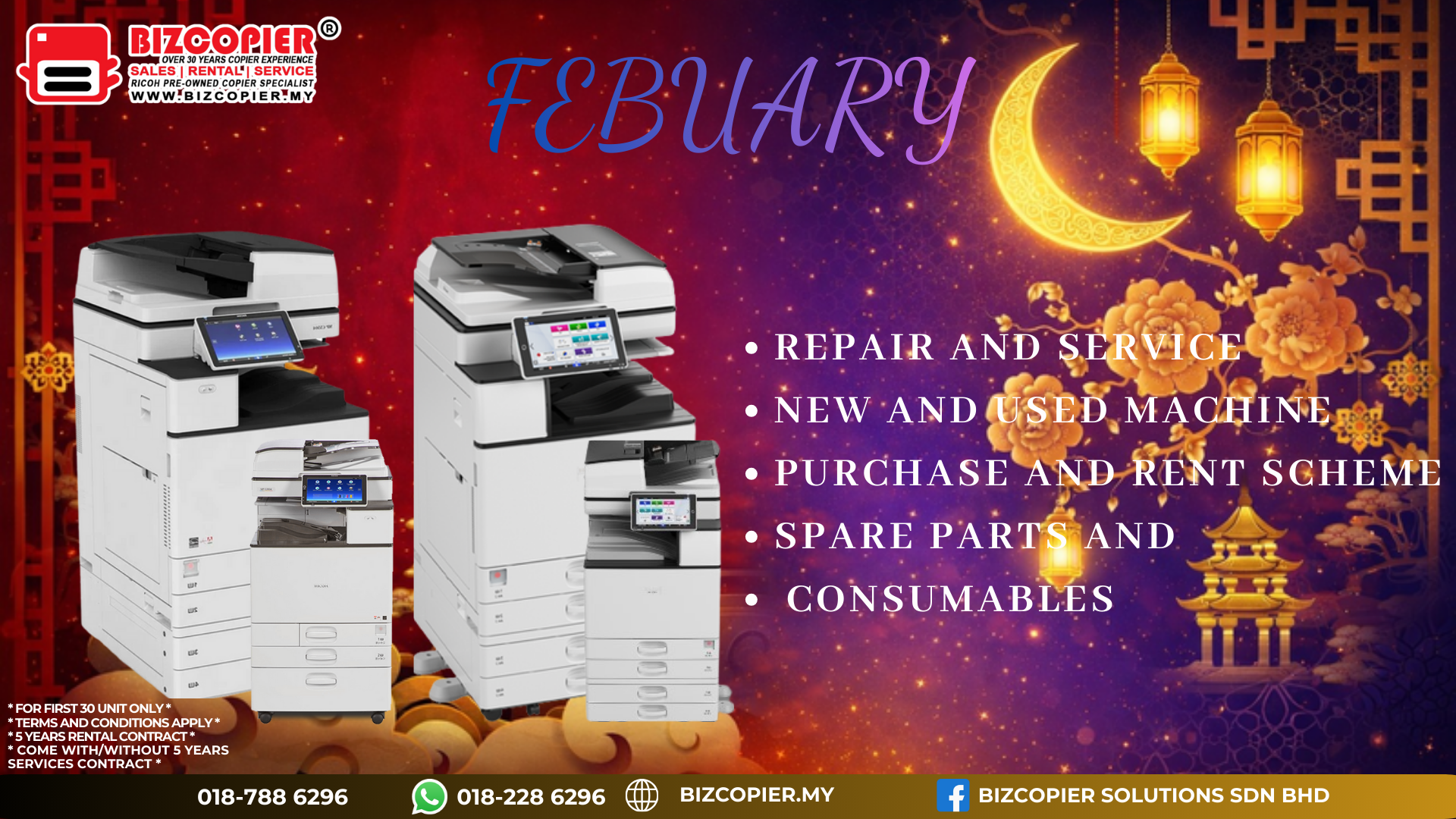









WELCOME TO FEBRUARY
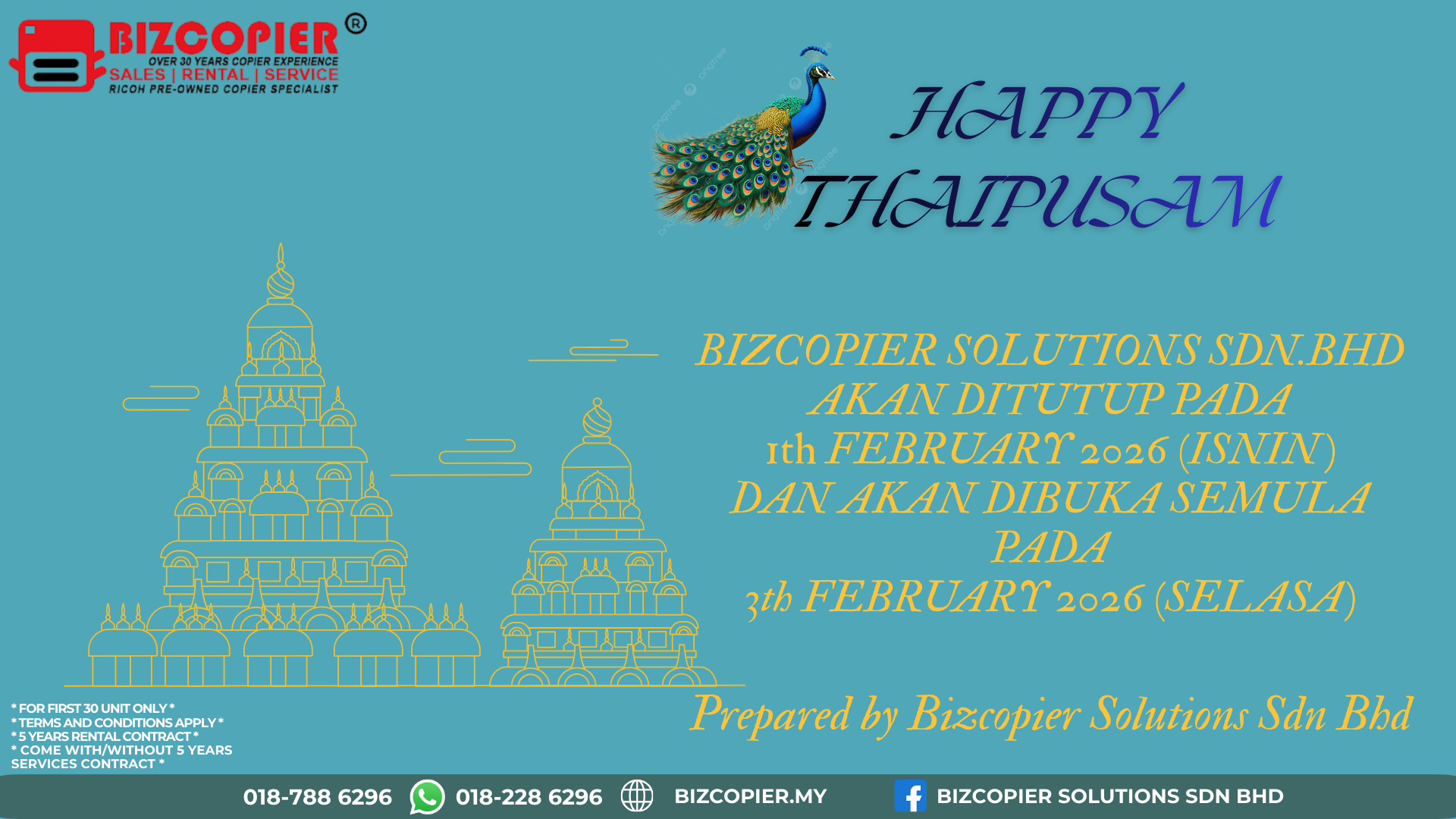
PUBLIC HOLIDAY THAIPUSAM
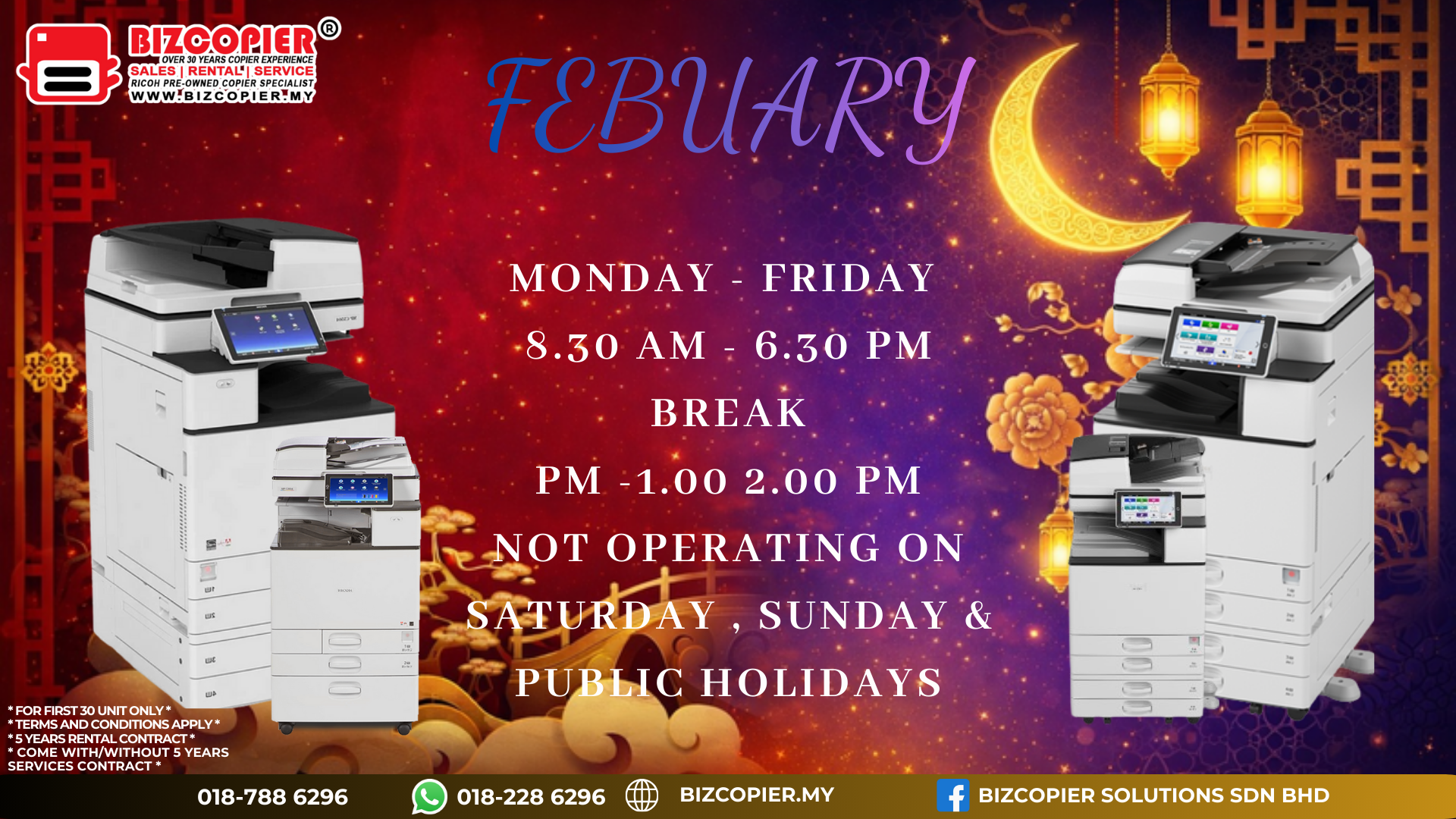
PHOTOCOPIER OPERATION HOURS
PHOTOCOPIER
PHOTOCOPIER MPC3504 RENTAL
PHOTOCOPIER MPC3504 PURCHASE
PHOTOCOPIER MPC5504 RENTAL
PHOTOCOPIER MPC5504 PURCHASE
PHOTOCOPIER IMC3500 RENTAL
PHOTOCOPIER IMC3500 PURCHASE
PHOTOCOPIER IMC5500 RENTAL
PHOTOCOPIER IMC5500 PURCHASE
INTERN WEBSITE

